Compostable Packaging: A Sustainable Shift with Nuances to Consider
Jun 26,2024 | KaLee Polybags
Ever stare at a mountain of empty packaging, wondering where it all goes? Traditional options often end up in landfills, taking centuries to decompose. Compostable packaging emerges as a potential solution, but it's not a one-size-fits-all answer. Let's delve into this innovative packaging and explore its potential and limitations.
The Promise of Compostable Packaging
Imagine packaging that breaks down naturally, leaving behind nutrient-rich compost. That's the magic of compostable packaging! Made from plant-based materials like corn starch or sugarcane, these options decompose quickly in specific composting programs.
Benefits for a Greener Future
Compostable packaging offers several environmental advantages:
- Reduced Landfill Waste: Diverting packaging waste from landfills significantly reduces our environmental footprint. Compostable options decompose in months, unlike traditional plastics.
- Nutrient-Rich Compost: The breakdown process results in excellent fertilizer for soil and plant growth, creating a closed-loop system.
- Sustainable Materials: Made from renewable and often biodegradable materials, compostable packaging aligns with sustainability principles. It fosters a future where packaging choices don't come at the expense of resources.
Beyond Groceries: A World of Uses
Compostable packaging isn't just for fruits and veggies! Here are some surprising applications:
- Food Service: Restaurants and cafes can use compostable take-out containers, plates, cups, and cutlery.
- Retail: From shopping bags to product packaging, compostable options can be used across various sectors.
- E-commerce: Shipping companies and online retailers can utilize compostable mailers and cushioning materials.
- Event Swag: Ditch the plastic water bottles and goody bags! Compostable options are perfect for eco-friendly events.
The Not-So-Green Side: Considerations for Brands
Compostable packaging has its limitations:
- Industrial Composting Facilities Needed: Compostable materials often require specific industrial composting facilities, which may not be widely available in all regions. Backyard composting might not be suitable for all options.
- Consumer Confusion: Clear labeling and consumer education are crucial. Mishandled compostable packaging can contaminate traditional compost streams.
- Lifecycle Assessment: While the end-of-life benefits are promising, the environmental impact of production and transportation of compostable packaging needs to be factored in.
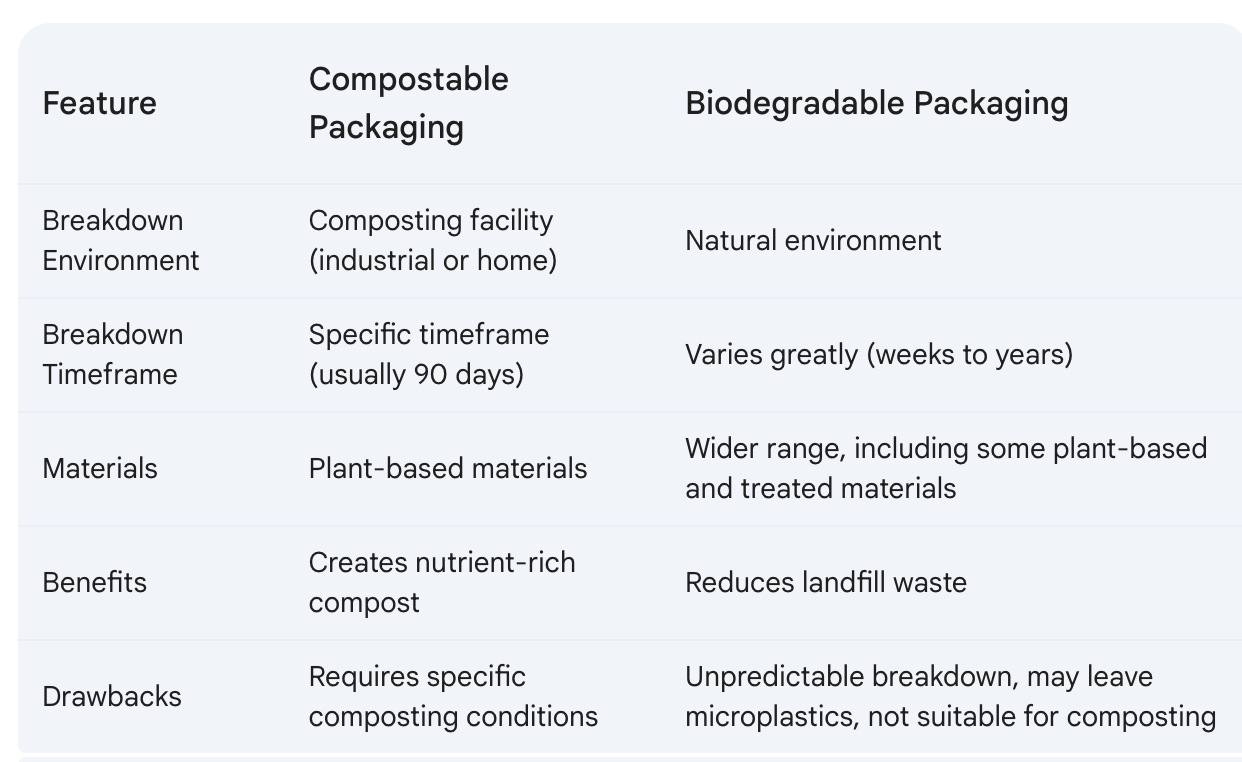
How it Compare with Biodegradable Packaging
Before You Go Completely Compostable: A Strategic Approach
Brands considering the switch should:
- Evaluate Your Needs: Not all products require compostable packaging. Focus on items with short shelf life or those typically discarded with food scraps.
- Partner with Experts: Consult with packaging suppliers and composting facilities to ensure compatibility and optimal environmental impact.
- Educate Your Customers: Clear labeling and educational campaigns are essential for proper disposal and maximizing the environmental benefits.
Compostable packaging offers a promising path towards a more sustainable future, but a thoughtful approach is necessary. By carefully considering its limitations and implementing best practices, brands can make informed choices for the environment.
Together, we can make a difference. By choosing compostable packaging responsibly, we're not just protecting the environment, we're sending a message that sustainability matters. Let's create a future where our packaging choices nourish the planet, not burden it.
Comment